The Department of Earth and Space Sciences administers several state-of-the-art research facilities and has close collaborations with other departments, schools, and research centers at the University of Washington. ESS also works closely with researchers from the United States Geological Survey, several of whom have offices within our department and/or department affiliate status. Many of our faculty, postdocs, and graduate students teach, conduct research, and collaborate within these centers and programs.
On this page:
Research Centers
 Paros Geohazards Center
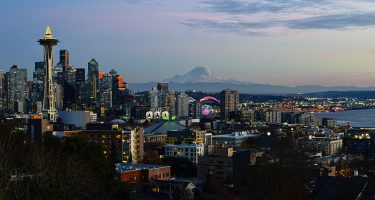
The mission of the Paros Geohazards Center is the development and exploitation of novel sensing technologies and the algorithms to analyze their signals related to numerous geohazards. The Center also engages community, state and federal partners who can benefit from these data streams and the research advances they facilitate. The Paros Geohazards Center identifies and pursues the most promising and exciting emerging developments in geohazards research. The Center has launched several high-priority flagship projects that build upon the depth of expertise at the University of Washington.
 Pacific Northwest Seismic Network
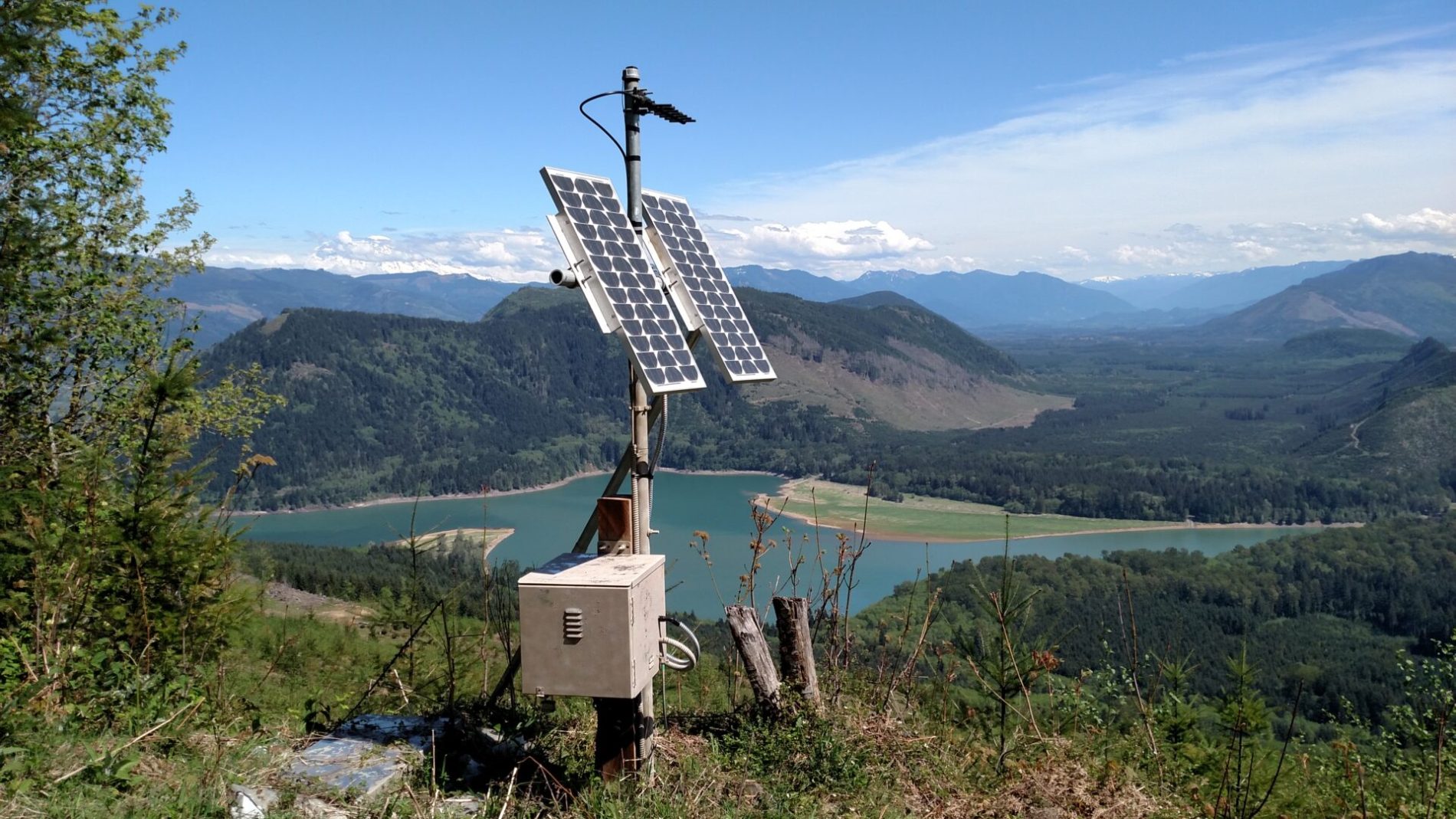
The Pacific Northwest Seismic Network (PNSN), headquartered in ESS and operated cooperatively with the University of Oregon, monitors earthquake and volcanic activity across the Pacific Northwest. PNSN is “dedicated to reducing impacts of earthquakes and volcanic eruptions in the states of Washington and Oregon by providing accurate and fast information about earthquakes and ground motions to scientists, engineers, planners, and the public.” PNSN has over 300 seismograph stations distributed across the region and is the second largest seismic network in the United States. Several ESS faculty, including PNSN Director Harold Tobin, staff, postdocs, and students (undergraduate and graduate) help operate PNSN.
World Wide Lightning Location Network (WWLLN)
The World Wide Lightning Location Network (WWLLN – pronounced ‘woollen’), is a global network monitoring lightening activity over the entire Earth. Specifically, it is a network of very low frequency (VLF) radio lightning sensors operated by the University of Washington in Seattle. Most ground-based observations in the 3 – 30 kHz VLF band are dominated by impulsive signals from lightning discharges called “sferics”. Significant radiated electromagnetic power exists from a few hertz to several hundred megahertz, with the bulk of the energy radiated at VLF. With our world wide network of lightning sensors, we are producing regular maps of lightning activity over the entire Earth.
Quaternary Research Center
The Quaternary Research Center (QRC) is the oldest interdisciplinary center at UW and one of oldest Quaternary centers in the country. The QRC draws together UW faculty, students, associates, and visiting researchers in the study of everything from tectonics to climate, hydrosphere to ecosystems, and human evolution/adaptations to environmental impacts over the past 2.6 million years. About half of the faculty in the QRC are from ESS.
Research Facilities
UW Fiber Lab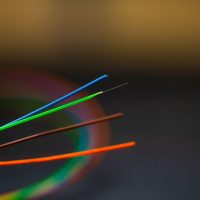
The UW Photonic Sensing Facility, with funding from the M.J. Murdock Charitable Trust, is led by two of our newest faculty, Brad Lipovsky and Marine Denolle, along with Will Wilcock in Oceanography. The facility uses distributed acoustic sensing with optical fibers to monitor and explore surface motion, temperature, and other properties in diverse systems, with applications not only in the study of crustal deformation, but also hydrology, land surface processes, and glaciology. See the Fiber Lab website for more information.
Planetary High Pressure Mineralogy Lab
The mineral physics laboratory, led by Baptiste Journaux and Mike Brown, studies the physical chemistry and thermodynamics of planetary materials at high pressures such as water-rich minerals (ice/hydrates), aqueous liquids, silicates and metals relevant for planetary interiors, with a focus on icy ocean worlds of our solar system and beyond. The lab is equipped with diamond anvil cells and a ultrasonic hydraulic large volume tank high pressure apparatuses, coupled with resistive heating and cryo-cooling and Raman spectroscopy allowing to characterize thermodynamic stability, speciation, sound speed, equations of states, etc. This research led to the discovery of a new forms of NaCl hydrates (see the paper in the Proceedings of the National Academy of Sciences) and the development of the SeaFreeze framework for the thermodynamic representation of water up to extreme conditions.
Δ*IsoLab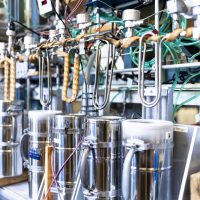
Δ*IsoLab is the isotope geochemistry laboratory of Eric Steig, Roger Buick, Becky Alexander (Atmospheric and Climate Science) and Kate Huntington. Δ*IsoLab researchers use the analysis of light stable isotopes to study the geosphere, atmosphere, hydrosphere, biosphere, and cryosphere. With the help of superlative lab manager, Andrew Schauer, these faculty have developed several widely-used novel methods and instruments, and Δ*IsoLab is recognized as one of the leading light-stable-isotope geochemistry laboratories in the world. Numerous other faculty within the department and across UW and beyond have worked collaboratively with Δ*IsoLab faculty for their research. Like other labs in ESS, Δ*IsoLab is a research lab, not a contract lab. Faculty or students interested in collaborative projects should read the lab’s Sample Analysis policy.
Non-Traditional Isotope Laboratory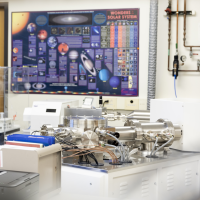
The Isotope Geochemistry Laboratory led by Fang-Zhen Teng comprises two multi-collector ICP mass spectrometers (a Nu Plasma I and a Nu Plasma II) along with four clean labs and 9 laminar flow fume hoods for sample processing. This lab is focused on the development and application of non-traditional isotopes in studies of geological, planetary and biological processes. Our techniques involve both purification of targeted elements through column chromatography in a clean sample preparation laboratory and high-precision isotopic analyses using Multi-Collector Inductively Coupled Plasma Mass Spectrometry (MC-ICPMS). For more information, please contact Dr. Fangzhen Teng.
Geomicrobiology Laboratory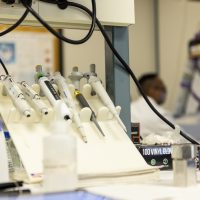
The Geomicrobiology Lab led by Drew Gorman-Lewis houses the facilities necessary for growing microbes and performing low temperature aqueous geochemical and geomicrobiological experiments. The lab contains an autoclave, laminar flow hood, incubator/shaker, and an anaerobic chamber for growing microorganisms. There are two high speed refrigerated centrifuges and a freeze dryer for preparation of biomass and mineral powders. The analytical equipment in the lab consists of an auto-titrator, a spectrophotometer, an inverted light microscope, and an isothermal calorimeter. Research foci in the lab are surface reactivity of minerals and microorganisms and thermodynamics of natural systems. For more information, contact Drew Gorman-Lewis.
Cosmogenic Nuclide Laboratory
The Cosmogenic Nuclide Lab led by John Stone provides facilities for preparation of samples for analysis of Be-10, Al-26 and Cl-36 in a range of geological materials. The lab contains dedicated areas for mineral separation, low-blank chemical separations and target preparation for accelerator mass spectrometry. Samples produced in the lab are analyzed at accelerator facilities in the United States and Australia. We work on a variety of cosmogenic nuclide applications in geomorphology, paleoclimatology and geologic hazard assessment, as well as basic cosmogenic nuclide methodology. See the CosmoLab website for more information.
TraceLab
The Tracelab is a mass spectrometry facility for the analysis of trace elements in natural and man-made materials run jointly by PIs from Earth and Space Sciences (Marjorie Cantine) and the School of Oceanography. We help users from within UW as well as federal partners, external research groups, and industry through methods development, measurements, and data analysis. Designed to uncover the geological and biological processes that shape our planet, reconstruct past climate, track animal migration, and quantify trace metal contamination. We work with water, minerals, biological samples, and synthetic materials. We conduct small scale mapping as well as bulk analysis.
Closely Allied UW Programs
UW Astrobiology Program
ESS is part of the internationally recognized UW Astrobiology Program, in which graduate students obtain a dual-title PhD in ESS and Astrobiology.
Applied Physics Laboratory
UW research center with a focus on engineering applications to the study of the oceans and cryosphere. The Polar Science Center, a division within APL, is closely allied with the glaciology program in ESS, and includes professors Ian Joughin, Ben Smith, and Dale Winebrenner, and Daniel Shapero, all of whom advise ESS graduate students.
Burke Museum
The Burke Museum, located on the UW campus, is an active research museum. The more than 18 million biological, geological and cultural objects in its collections are a respected and relied-upon resource for researchers here and around the globe. Ruth Martin, a lecturer in ESS, holds a primary affiliation with the Burke, where she is research associate on the Geology & Paleontology team.
The Minerals Collection is part of the Burke Museum Paleontology and Geology Department and is associated with the ESS and Biology Department.
Program on Climate Change
The mission of the Program on Climate Change is to provide a framework of intense cross-disciplinary collaboration that furthers research and education in climate science.
The Minor in Climate Science, within the Program on Climate Change, has course requirements within ESS. Find out more about this minor here.